
How To Avoid Genetically Modified Foods
Why are Genetically Modified Foods dangerous? The documented health risks of Genetically Engineered Foods are the following:
GM Potatoes Damaged Rats. Rats Fed GMO Tomatoes got bleeding stomachs, several died. Rats Fed Bt Corn had multiple health problems. Mice Fed GM Bt Potatoes had intestinal damage. Workers exposed to Bt cotton developed allergies. Sheep died after grazing in Bt cotton fields. Inhaled Bt corn pollen may have triggered disease in humans. Farmers report pigs and cows became sterile from GM corn. Twelve cows in Germany died mysteriously when fed Bt corn. Mice fed Roundup Ready soy had liver cell problems. Mice fed Roundup Ready soy had problems with the pancreas. Mice fed Roundup Ready soy had unexplained changes in testicular cells. Roundup Ready Soy Changed Cell Metabolism in Rabbit Organs. Most offspring of rats fed Roundup Ready soy died within three weeks. Soy allergies skyrocketed in the UK, soon after GM soy was introduced. Rats fed Roundup Ready canola had heavier livers. Twice the number of chickens died when fed Liberty Link corn. GM peas generated an allergic-type inflammatory response in mice. Eyewitness reports: Animals avoid GMOs. A GM food supplement killed about 100 people. (see Genetic Roulette by Jeffrey Smith for more details) Furthermore, the disappearance of the bees in North America relates to GM pollen.
The USDA Certified Organic symbol shown above is not perfect. The National Organic Standards Board (NOSB) that’s responsible for organic certification allows up to 5% by weight of remaining ingredients to be part of their USDA’s National List which allows some wiggle room for GMO contamination. They can make exceptions due to pressure from powerful pro-GMO lobbyist groups and companies who want that organic certification without adhering to the strict guidelines.
How To Avoid Genetically Modified Foods:
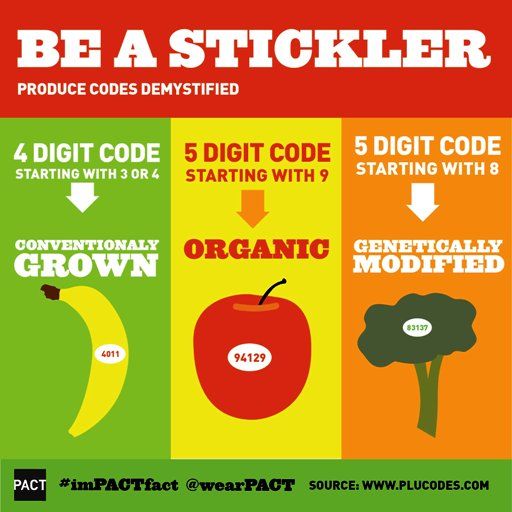
1. Buy Organic: Certified organic products cannot be produced using GMO ingredients. So if you can, buy only products labeled "100% organic", "organic," or "made with organic ingredients."
2. Look for "non-GMO" labels (above). Companies may voluntarily label products as "non-GMO." Some labels state "non-GMO" while others spell out "Made Without Genetically Modified Ingredients." Products that carry the Non-GMO Project Seal have third party verification as being in compliance with Non-GMO Project standards for GMO avoidance. Some products limit their claim to only one particular “At-Risk” ingredient such as soy lecithin, listing it as “non-GMO.” Look for dairy products labeled "No rBGH or rBST,” or “artificial hormone-free.”
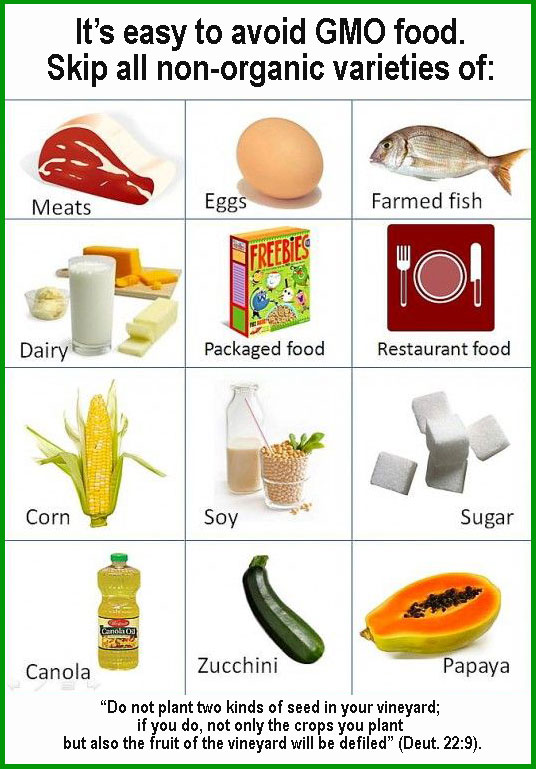
3. Avoid at-risk ingredients. If it's not labeled organic, avoid products made with the "Big Four" GM crops: Corn, Soybeans, Canola, and Cottonseed, used in processed foods. Also, more than 50% of Hawaiian papaya is GM and a small amount of zucchini and yellow squash. Also, become familiar with our list of invisible GM ingredients and avoid sugar from GM Sugar Beets.
Corn
• Corn flour, meal, oil, starch, gluten, and syrups
• Sweeteners such as fructose, dextrose, and glucose
• Modified food starch (May be derived from other sources)
Any conventional product containing corn. This includes conventional corn muffins, fresh corn, high fructose corn syrup, modified food starch and corn starch products like infant formula and Cheerios, foods commonly given to babies and toddlers. Vitamin C supplements in the form of corn-based ascorbic acid can contain GMOs.
Soy
• Soy flour, lecithin, protein, isolate, and isoflavone
• Vegetable oil and vegetable protein (May be derived from other sources).
Any conventional product containing soy or derivatives. This includes their oils and by products like soy lecithin, protein, isolate, and isoflavone, as well as, tofu, tempeh, and soybean oil. This would include most vitamin E supplements which are derived from soybean oil.
Animal Products: Animals who have eaten GMO corn and soy. Any conventional dairy, eggs, chicken, beef, pork, or other animal products. These animals’ diet contain GMO corn/soy. Also be sure your dairy is free of rBGH, a Monsanto genetically-engineered growth hormone that forces cows to artificially increase milk production by 10 to 15 percent. It is a bovine growth hormone gene mixed with e coli to create rBGH, also called rbST. Even dairy products that are listed “rBGH-free” can contain GMOs because, again, the animals feed on GMO grain. Organic Valley, Trader Joe’s and Whole Foods Brand dairy are both rBGH and GMO free. New Zealand or Australian lamb are popular since they are usually grass-fed.
Farmed-raised fish/seafood because they most likely are fed GMO meal. This would include salmon, trout, carp, cod, turbot, halibut, shrimp and tilapia. Be sure to purchase only “wild caught.”
Canola and Canola oil (also called rapeseed oil) Canola/rapeseed oils. Canola is a modified “food” derived from the rapeseed. Ever heard of mustard gas? Yeah, it’s part of the same family. Over 80% of the Canola/rapeseed in the US has been genetically modified and it’s better suited as an industrial product than food.
Cotton and Cottonseed oil
Sugar: Avoid anything not listed as 100% cane sugar. GM beet sugar recently entered the food supply. To avoid it, look for organic and non-GMO sweeteners, candy and chocolate made with 100% cane sugar, evaporated cane juice or organic sugar. Any conventional product that contains sugar… nearly all sugar in the U.S. is derived from GMO sugar beets. This means “no” to anything with ingredients labeled: sugar, fructose, dextrose, glucose, caramel color, mannitol, maltodextrin, etc. Fortunately, you’re safe if ingredients are listed as 100% sugar cane, evaporated cane juice or organic sugar. That’s because the sugar cane plant is more complicated to genetically modify. But, Monsanto expects to have a Roundup Ready/Bt variety on the market by 2015 Beware of inexpensive or highly processed honey because the bees could have feasted on GMO vegetation. Aspartame -- the artificial sweetener also known as NutraSweet and Equal, which is derived from GM microorganisms. Aspartame… not only is it a neurotoxin, it’s created using a genetically modified bacteria strain.
Alfalfa. Even organic alfalfa is at risk of cross-contamination by the GMO crop. Unfortunately, the USDA didn’t think this was a big deal.
Conventional cotton, particularly from India and China. This includes processed foods that contain cottonseed oil.
4. Download the shopping guide at www.nongmoshoppingguide.com. Use it when you write out your shopping list. Keep it with you whenever you shop and buy products listed in the Guide. Store it inside your reusable shopping bag, put in your coupon holder or check book, or leave it in your car.
Buy organic eggs where hens are fed non-GMO grain, grass-fed beef (not GMO grain fed), organic raw milk and wild-caught fish (not farm-raised). Buy organic honey since otherwise the bees are fed GM corn syrup. Processed foods often have hidden GM sources (unless they are organic or declared non-GMO). The following are ingredients that may be made from GMOs. Aspartame (also called AminoSweet®, NutraSweet®, Equal Spoonful®, Canderel®, BeneVia®, E951), baking powder, canola oil (rapeseed oil), caramel color, cellulose, citric acid, cobalamin (Vitamin B12), colorose, condensed milk, confectioners sugar, corn flour, corn gluten, corn masa, corn meal, corn oil, corn sugar, corn syrup, cornstarch, cottonseed oil, cyclodextrin, cystein, dextrin, dextrose, diacetyl, diglyceride, erythritol, Equal, food starch, fructose (any form), glucose, glutamate, glutamic acid, gluten, glycerides, glycerin, glycerol, glycerol monooleate, glycine, hemicellulose, high fructose corn syrup (HFCS), hydrogenated starch, hydrolyzed vegetable protein, inositol, inverse syrup, inversol, invert sugar, isoflavones, lactic acid, lecithin, leucine lysine, malitol, malt, malt syrup, malt extract, maltodextrin, maltose, mannitol, methylcellulose, milk powder, milo starch, modified food starch, modified starch, mono and diglycerides, monosodium glutamate (MSG), Nutrasweet, oleic acid, Phenylalanine, phytic acid, protein isolate, shoyu, sorbitol, soy flour, soy isolates, soy lecithin, soy milk, soy oil, soy protein, soy protein isolate, soy sauce, starch, stearic acid, sugar (unless specified as cane sugar), tamari, tempeh, teriyaki marinades, textured vegetable protein, threonine, tocopherols (vitamin E), tofu, trehalose, triglyceride, vegetable fat, vegetable oil, vitamin B12 vitamin E, whey, whey powder, xanthan gum, Vitamin C (ascorbic acid) although usually derived from corn, is probably not GM because it is not likely made in North America.
How to avoid GMOs
1. Buy food labeled “100% organic” or labeled by the 3rd party non-GMO project. These are the ONLY labels that legally guarantee food is 100% GMO free.
2. Buy meat that say the animals were fed 100% organic fed or grass-fed/finished. Or better yet, find a local farmer and buy your products closer to the source. Be sure to ask them if they’re committed to producing non-GMO products.
3. Buy 100% organic eggs that state “from 100% organic feed.” Safe grocery store brands include Organic Valley, Eggland’s Best, and Land O’ Lakes Organic eggs.
4. Buy 100% organic dairy products (grass-fed is even better) or European products from Switzerland and Greece (100% GMO-free) and France (mostly GMO-free.). Kalona Farms, Organic Valley, Trader Joe’s, and Whole Foods’ 365 Brand are safe brands.
5. Shop at farmer’s markets and remember that most produce is safe from GMOs, even conventional varieties, with the exception of corn, radicchio, beets, Hawaiian papaya, zucchini and yellow summer squash.
6. Organic whole grains, legumes, nuts and seeds are safe. But conventional RICE has been contaminated with GMOs. Buy organic rice only… safe brands include Lotus and Lundberg.
7. Keep eating out to a minimum.
8. Avoid processed and packaged foods/beverages.
9. Buy lots of fruit and veggies… even conventional produce is pretty safe from GMOs with the exception of corn, beets, zucchini, summer squash, radicchio and Hawaiian papaya.
10. Buy organic grains, legumes, nuts and seeds from bulk sections or online.
Invest in good quality, 100% organic butter, eggs and whole chickens. These are less expensive and go the distance. For example, use the chicken carcass for broth.
11. Also, buy cheaper cuts of organic meat like chuck roasts, shanks, etc. and use bones for broth.
Eat more gelatin. Either from organic-fed animals or from this source. Soup bones such as oxtail, shanks, necks, backs and feet are cheaper than muscle meat and are just as nutrient dense.
12. Buy cases of coconuts from local Asian grocery stores. Use the juice, pulp, and fat for a variety of recipes including this one and this one. You can also buy a gallon of coconut oil at bulk prices.
13. Grow your own food! Here’s a resource for safe seeds since many are contaminated with GMO strains due to Monsanto.
Surprising “safe” foods:
Tomatos, Potatoes and Wheat. While Monsanto flirted with GMO tomatos and potatoes, they weren’t popular due to their bad taste and susceptibility to spoilage. For now, these foods are relatively safe. Of course, organic is better to be sure. Wheat is often lumped into the GMO category, but the truth is there hasn’t been a successful attempt to make GMO wheat. While many are allergic to our highly tampered wheat crop today, it’s due to the high levels of gluten and starch, not GMOs.
Sources:
http://indiaenvironmentportal.org.in/files/cfs-shoppers-guide.pdf
http://www.eatwild.com/products/alaska.html
http://gmo-awareness.com/2011/05/05/is-organic-always-gmo-free/
http://www.sustainabletable.org/issues/rbgh/
http://www.theatlantic.com/health/archive/2011/12/how-much-of-your-food-labeled-as-organic-is-actually-organic/250301/
http://www.nongmoproject.org/
http://www.prnewswire.com/news-releases/studies-show-gmos-in-majority-of-us-processed-foods-58-percent-of-americans-unaware-of-issue-104510549.html
http://www.gmo-compass.org/eng/database/ingredients/200.docu.html
http://www.mamanatural.com/how-to-avoid-gmos/#sthash.qm1FCpFK.dpuf
Faith Farms and Faith Farms Country Store, Marilyn Guilmet, PO Box 625 Kodiak, AK 99615. (907) 486-3099. E-mail: faithfarmsmlg@gmail.com
Next Lesson: Are VACCINES Really Safe and Effective?
| Back to Home | Email
Us